


Hepagard Natural Liver Support Supplement with NAC, Vegan, Gluten-Free 30 Vegetable Capsules
Hepagard Natural Liver Support Supplement with NAC, Vegan, Gluten-Free 30 Vegetable Capsules
Hepagard, our natural remedy for liver support with N-Acetyl Cysteine (NAC), is clinically proven to detoxify the body and reduce heartburn, bloating, and indigestion within 30 days.
BUNDLE & SAVE
Couldn't load pickup availability

Hepagard Natural Liver Support Supplement with NAC, Vegan, Gluten-Free 30 Vegetable Capsules



Stage 1: Fat Buildup in Liver Cells
The modern diet makes heavy use ofsugars and carbohydrates, which areconverted to fat by the body. This canresult in a buildup of fat within the liver
cells.

Stage 2: Inflammatory Response
This buildup of fat within the liver cells
causes an autoimmune inflammatory
in which antibodies areresponsedispatched to target and attack the organ
itself.
Stage 3: Reduced Liver Function
Inflammation reduces the liver's negatively ability to function properly,
impacting its ability to detoxify the body
and process impurities, causing further
fat accumulation in the liver.
What Are the Consequences of Inflammation?
Without taking action, a fatty liver can lead to cirrhosis, which requires significant lifestyle changes.

Fat accumulation in the liver can ultimately lead to cirrhosis, the buildup of scar tissue which damages the organ. At this stage, significant and permanent lifestyle changes are necessary, such as abstaining from alcohol and severely limiting carbohydrate and sugar consumption.
What can we do to protect ourselves from this outcome?
The answer is to promote production of one key antioxidant which is essential for healthy liver function, free from inflammation.
The Biological Cause of a Fatty Liver
Researchers have identified the "mother of all antioxidants" that protects the liver against inflammation.

Your liver is responsible for a variety of functions, the most important of which is breaking down toxins which can cause inflammation and cell damage in the body.
As fat continues to accumulate in liver cells, your liver struggles to keep pace with inflammation and is unable to produce enough of what scientists have termed "the mother of all antioxidants" -- glutathione.
This antioxidant is the key actor in controlling inflammation brought on by free radical damage, creating the optimal environment for healthy liver function.
Introducing Hepagard
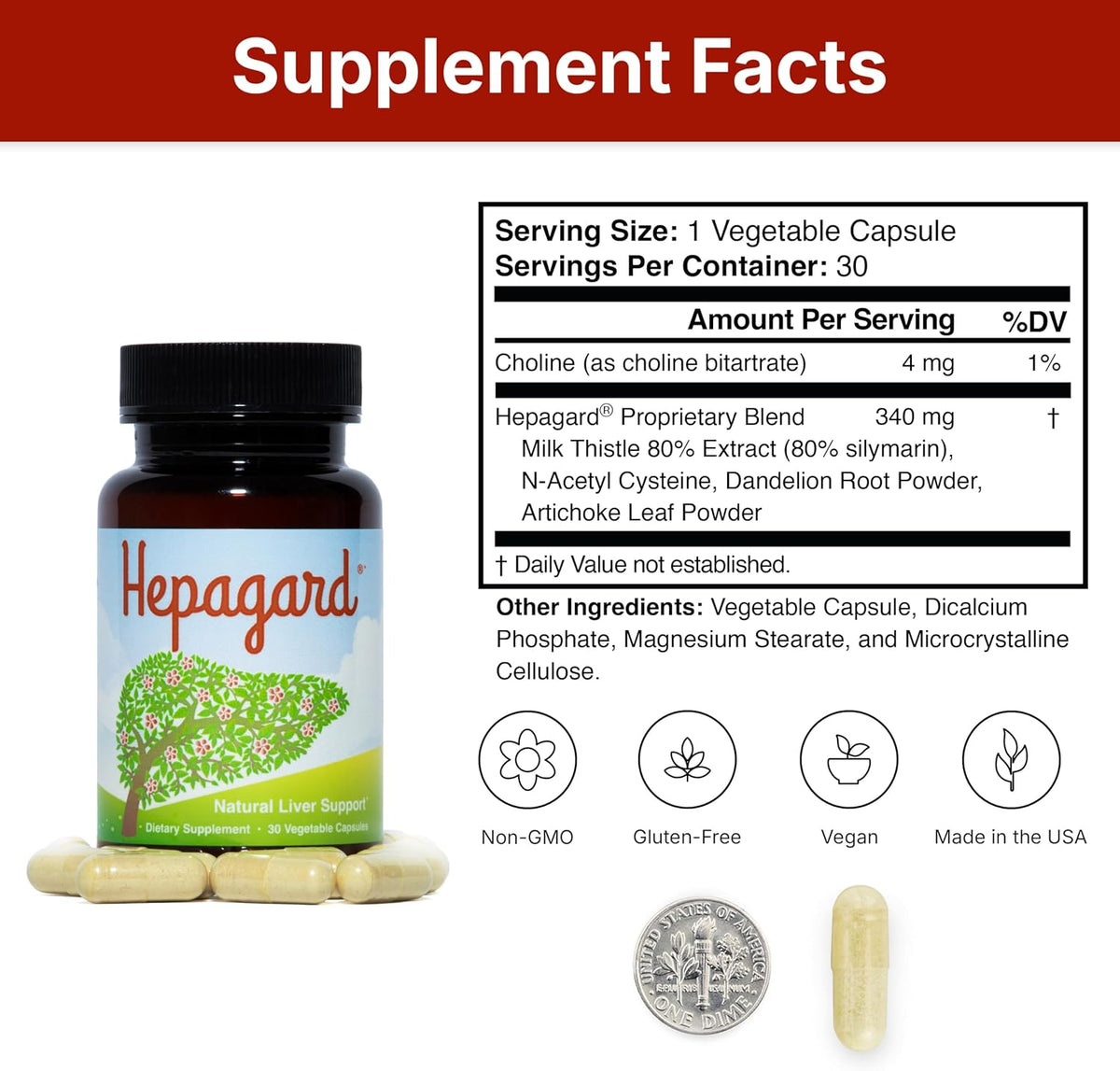
Our researchers have developed one natural remedy that combines 5 safe ingredients clinically proven to help support healthy liver function. Click one to find out more:


Milk Thistle
Milk Thistle
A flowering plant related to the daisyfamily, milk thistle has come to becultivated throughout the world for itsprotective effects on the liver.Research has shown the silymarincontent of milk thistle is responsiblefor its ability to prevent inflammationand lipid buildup in the liver. In oneclinical study conducted in 2014, milkthistle was found to reduce liver fatwhile also significantly decreasingliver size and weight.

N-Acetyl Cysteine
N-Acetyl Cysteine
Developed from the amino acid L-cysteine, N-acetyl cysteine is amainstay on the World HealthOrganization's List of EssentialMedicines. Originally used to treatacetaminophen poisoning, in whichtoxic byproducts of the medicationbuild up in the liver, this compoundcleanses the liver by increasinglevels of the antioxidant glutathione.In a 48 week study in 2019, patientstaking N-acetyl cysteine experiencedsignificant reduction in liver fatconcentration.

Dandelion Root
Dandelion Root
Known throughout the world for theiryellow flowers that turn into roundsilver balls, dandelions have beenused for thousands of years intraditional Chinese and NativeAmerican medicine to help cleansethe liver of toxins. Research indicatesthat while the entire plant can helpdetoxify the liver, the highestconcentration of liver protectivecompounds are found in the root ofthe plant. A 2013 clinical study found
that dandelion significantlydecreased lipid accumulation whilealso reducing metabolic hormone resistance.

Artichoke Leaf
Artichoke Leaf
Artichokes are edible thistle budsthat are commonly cultivated as fooddating back to the ancient Greeksand Romans. Beyond their delicioustaste, they have been found toprovide liver protective effects andhelp flush toxins from the body dueto their high concentration of antioxidants. In a 2018 clinical study,subjects who supplemented withartichoke leaf experienced reductionin lipid concentrations in the liver, as well as liver size.

Choline Bitartrate
Choline Bitartrate
Choline bitartrate is a common edibleform of choline, an essential nutrientthat can be synthesized by ourbodies but is primarily obtainedthrough dietary sources. It has beenestablished through numerousclinical studies that diets deficient indisease. For this reason, it is crucial
choline directly cause fatty liverto fortify your diet with choline to
prevent your liver from developing
this condition.

The Hepagard Clinical Study
A placebo-controlled study with 50 participants monitored the safety and effectiveness of Hepagard for 30 days. Here are the statistically significant results:
- Within 2 weeks, 90% of participants reported reduced abdominal bloating, with more than 95% feeling less bloated by the end of the study.
- After 2 weeks, 4 out of 5 reported less heartburn and indigestion, with more than 95% experiencing improved digestion by the end of the study.
- Within 30 days, 4 out of 5 reported increased energy levels and less fatigue.
- None of the participants reported any negative side effects.
* For more details, click here to view the complete results of the study.

What Makes Hepagard Different?
Placebo-Controlled Clinical Study
Analyzed for safety and efficacy over the course of 30 days in a placebo-controlledclinical study conducted by Princeton Consumer Research, which found thatparticipants reported normal, healthy digestion and balanced energy levels.
High Efficiency Formula
Contains the 5 most essential ingredients to support liver healthin an efficient formula designed for maximum absorption andpotency.
Premium Ingredients
Features only the highest quality ingredients available foroptimal support, including milk thistle extract standardized tocontain 80% silymarin.